
While browsing Mercari for Super Famicom games, a factory-sealed copy of Romancing SaGa caught my eye.
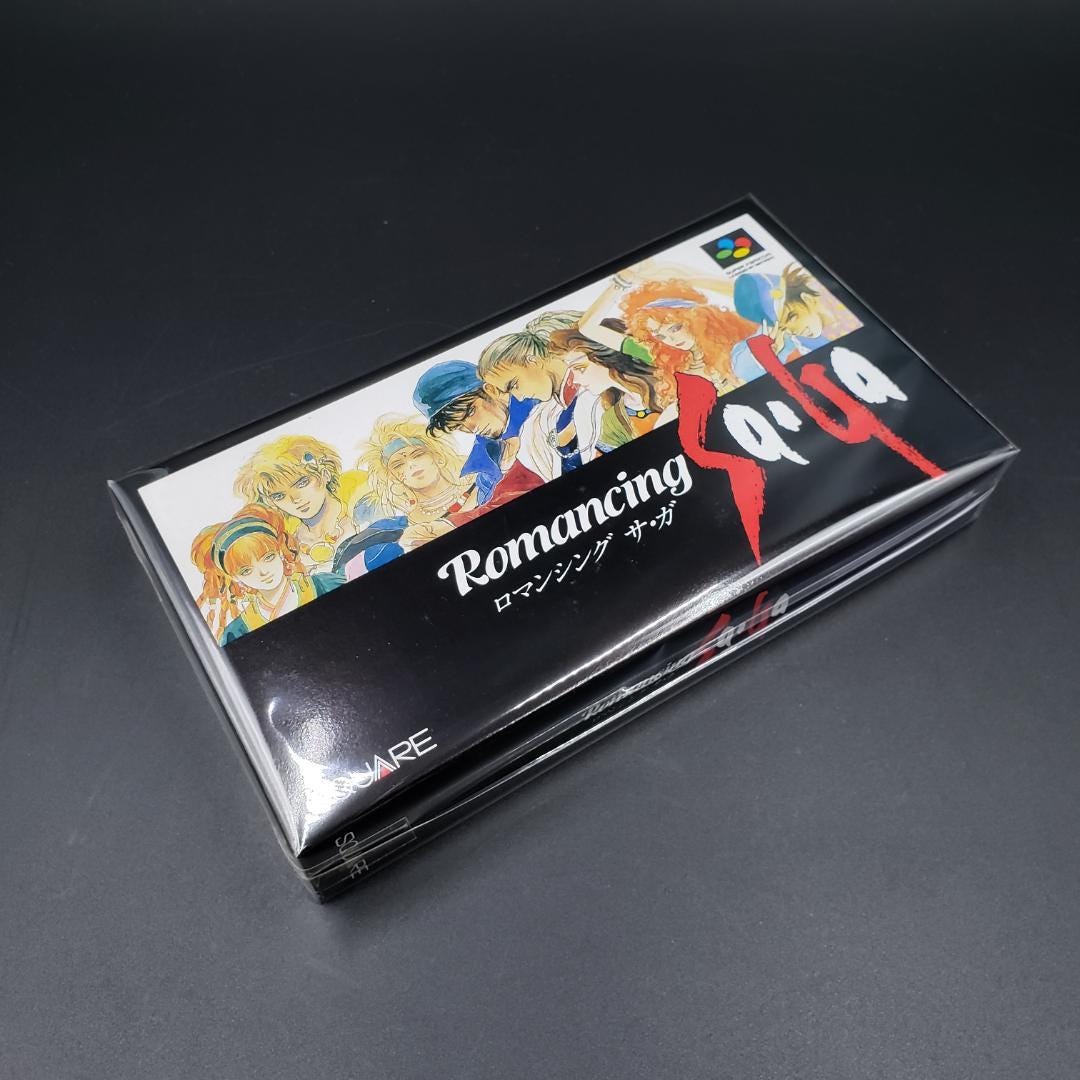
The sleek black cardboard box looked impeccably clean, hardly reflecting its age of over three decades. The item description read “Brand New / Factory Sealed,” adding, “There are no opening creases on the box flaps.”
Of course, this particular product has no direct relation to the story I am about to tell. Yet, looking at this sealed copy of Romancing SaGa, I was suddenly reminded of a reader submission I had read in a gaming magazine long ago. That story, too, featured a copy of Romancing SaGa that had been preserved without ever being opened.
A Game Unwanted, Alongside Dragon Quest V
Before the internet was a thing, gaming magazines were not just a place to discover upcoming releases or strategy guides; they were a community space where you learned how fellow players bought and experienced their games.
The letter I read was from a gamer who had bought Dragon Quest V: Hand of the Heavenly Bride. They ONLY wanted Dragon Quest V. However, the retailer forced them to buy Romancing SaGa together as a mandatory bundle—a practice known in Japan as “tie-in sales.”
It wasn’t a game they bought by choice. As a result, Romancing SaGa remained unopened, tucked away somewhere at home—or so the submission went, if I remember correctly. Since I read this over 30 years ago, I can’t recall the specific magazine or the exact wording. Still, the story of leaving an unwelcome filler game sealed stuck with me.
Back then, “tie-in sales”—where retailers forced customers to buy less popular titles alongside highly anticipated hits—became a notorious issue in the Japanese gaming industry. Because it was such a reality of the era, that story felt deeply authentic to my younger self.
Factory Sealed Doesn’t Always Mean “Cherished”
Today, factory-sealed retro games often fetch a pretty penny.
When we see a sealed copy, we naturally assume that it has been treasured and stored carefully as a collector’s item. However, recalling that old magazine story makes me realize that isn’t always the case. That gamer didn’t keep Romancing SaGa unopened because it was precious to them. They kept it closed simply because they didn’t want to play it.
Some games have worn-out boxes and names scrawled in marker on the cartridge because they were played to death. On the flip side, some games remain brand-new simply because no one ever cared to play them. The physical condition of a surviving item tells us how well it was preserved. Yet, why it ended up in that condition can never be read from its exterior alone. This copy of Romancing SaGa reminded me of that simple fact.
What If That Gamer Had Opened the Box?
I have never played Romancing SaGa myself, so I can’t evaluate this game from a player’s perspective. However, looking back at its history, Romancing SaGa was released in 1992 as an ambitious RPG featuring a “Free Scenario System.” It allowed players to choose from eight main characters and shape the narrative based on their choices. Rather than just following a linear storyline, your adventure morphed according to your decisions. For its time, this was an incredibly daring design.
On the other hand, the Super Famicom version is infamous among collectors for its numerous bugs, coding errors, and seemingly unfinished event triggers. Later on, when it was ported to the WonderSwan Color, many of these bugs were fixed and game balance adjustments were made. In short, rather than labeling it simply as a “good” or “bad” game, it was a title that possessed both brilliant ambition and structural instability.
This makes me wonder: what would have happened if that gamer had opened the box back then? Having been forced to buy a game they didn’t want, only to run into bugs and obscure mechanics, they might have felt thoroughly vindicated in not wanting it in the first place. Or, captivated by a level of freedom unlike any other RPG, they might have found themselves completely obsessed with a game they had originally written off as unwanted baggage.
Never having played it myself, I can’t sit here and promise they would have had a blast. And that is exactly why, even after 30 years, I remain so intrigued.
Authenticating a Box Preserved for Over 30 Years
Let’s take another look at the Romancing SaGa listing found on Mercari.
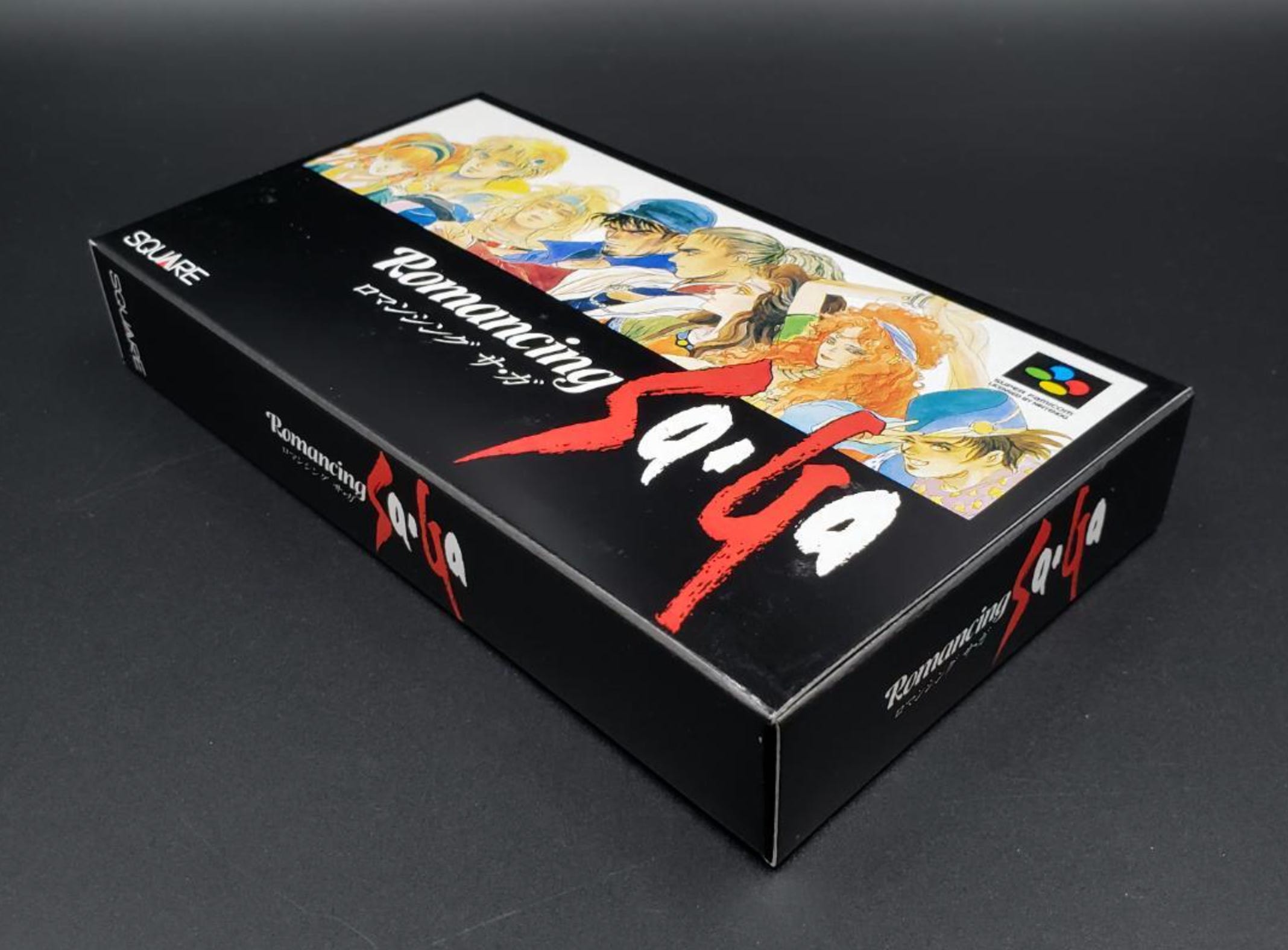
Item Information
Item: Romancing SaGa (Super Famicom)
Price: ¥32,900 (Approx. $210 - $220 USD)
Condition: Factory Sealed / Brand New (新品未開封)
Seller Notes: No opening flap creases.
When inspecting a cardboard Super Famicom box, there are several key points to check in photos: color fading, corner wear, crushing, and damage around the opening flaps.
Based on the attached photos, there is no noticeable major fading or corner crushing, and the deep black base color of the box appears well-preserved. However, photos alone can never offer a 100% guarantee. Also, because it is sealed, you cannot directly inspect the internal condition of the cartridge, manual, or inner tray. If you were to purchase it, you should take into consideration both what can and cannot be verified.
You Can Authenticate the Condition, But Not the “Why”
Inspecting this listing brought another realization.
By scrutinizing the posted photos and weighing evidence like box condition and flap integrity, you can authenticate to a reasonable degree whether the item is truly factory-sealed. Nevertheless, no matter how much you zoom in on the photos, there is something you will never know: “Why was this box never opened?”
Was it preserved as a cherished collector’s item? Did someone buy it with every intention to play, only to run out of time? Or, like the magazine reader from all those years ago, was it a game they never actually wanted in the first place?
Of course, this Mercari listing has no relation to the Romancing SaGa mentioned in that old magazine article. It would be foolish to project that old narrative onto this specific item. While we can evaluate the physical condition of a game, we can never evaluate the journey that brought it here. Perhaps that, too, is something we must keep in mind when dealing with retro games.
Digging for Items, Unearthing Memories
While searching for Super Famicom games, I happened to find a single sealed title. What I dug up wasn’t merely a copy of Romancing SaGa. Triggered by that black box, a reader’s letter from a magazine over 30 years ago was unearthed from the depths of my own memory.
Did that gamer end up never opening the box? Or did they suddenly decide to unseal it one day years later? And if they did play it, were they frustrated by the bugs and rough edges? Or were they spellbound by the freedom of its non-linear system?
We will never know the answer. There are things we can authenticate, and things we cannot. Still, as we search for an item, verify its state, and ponder its background, forgotten memories of our own can suddenly surface.
Perhaps retro game digging isn’t just about unearthing physical items—that was the thought left behind by a sealed copy of Romancing SaGa.
Written by Yoshioka | Translated by Lotus
[Market Reality Note] The artifacts featured in our reports are live, highly volatile listings sourced directly from the Japanese domestic secondary market. Due to the underground nature of these collector ecosystems, items may sell out or be removed by the seller at any given moment. Consider each report a real-time window into a vanishing opportunity.
Request Our Premium VIP Hunting Service for Ultra-Rare Vintage Items:
The artifacts exist. The mud is deep.
If you seek a specific Holy Grail in the Japanese underground market and demand our uncompromising vetting process, this private dispatch is available.