
GAME OVERVIEW
Illusion of Gaia is an action RPG released for the Super Famicom by Enix (now Square Enix) on November 27, 1993. Carrying the model number SHVC-JG, its original retail price was ¥9,800. The game was developed by Quintet—a studio founded by former Nihon Falcom staff—and stands as a masterpiece alongside Soul Blazer and Terranigma as part of the celebrated “Quintet Trilogy.”
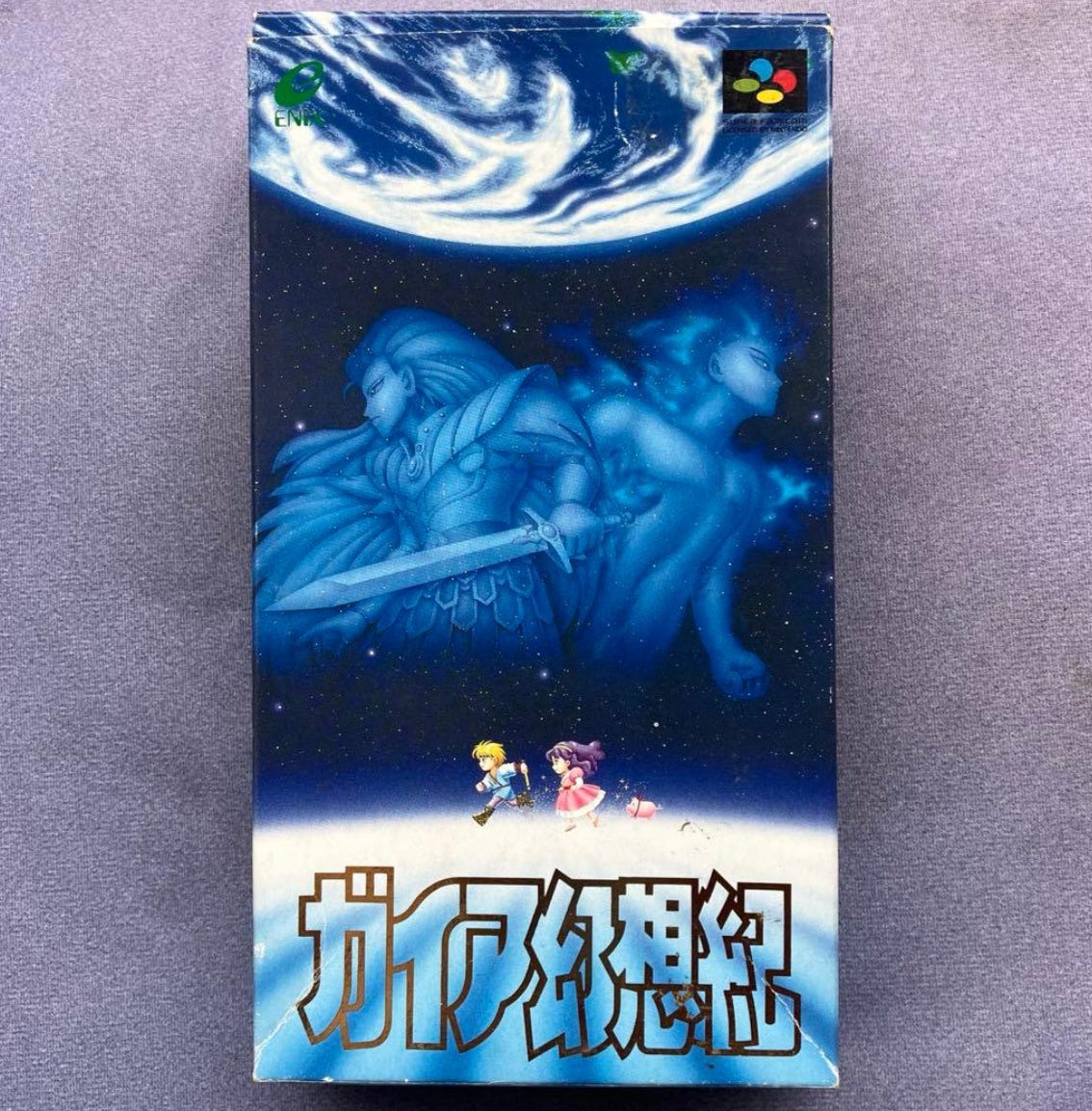
At the core of the gameplay mechanics is the protagonist, Will, who transforms through Dark Spaces into Freedan the Dark Knight, and later into Shadow. Each form possesses distinct abilities required to traverse the dungeons. Moving away from traditional experience point leveling, the game employs a progression system in which clearing all enemies of an area rewards the player with stat-boosting jewels. By eliminating tedious grinding, the design prioritizes player skill and the rewarding thrill of exploration.
What makes this title particularly extraordinary is the creative pedigree behind its production. Legendary shōjo manga artist Moto Hagio served as the character designer, shaping a delicate and melancholic aesthetic. The scenario was penned by Japan SF Grand Prize-winning author Mariko Ohara, crafting a poignant drama centered on young boys and girls swept up by a cruel fate. Complementing this is Yasuhiro Kawasaki’s mythic, nostalgic soundtrack, which elevates the game’s ethereal atmosphere.
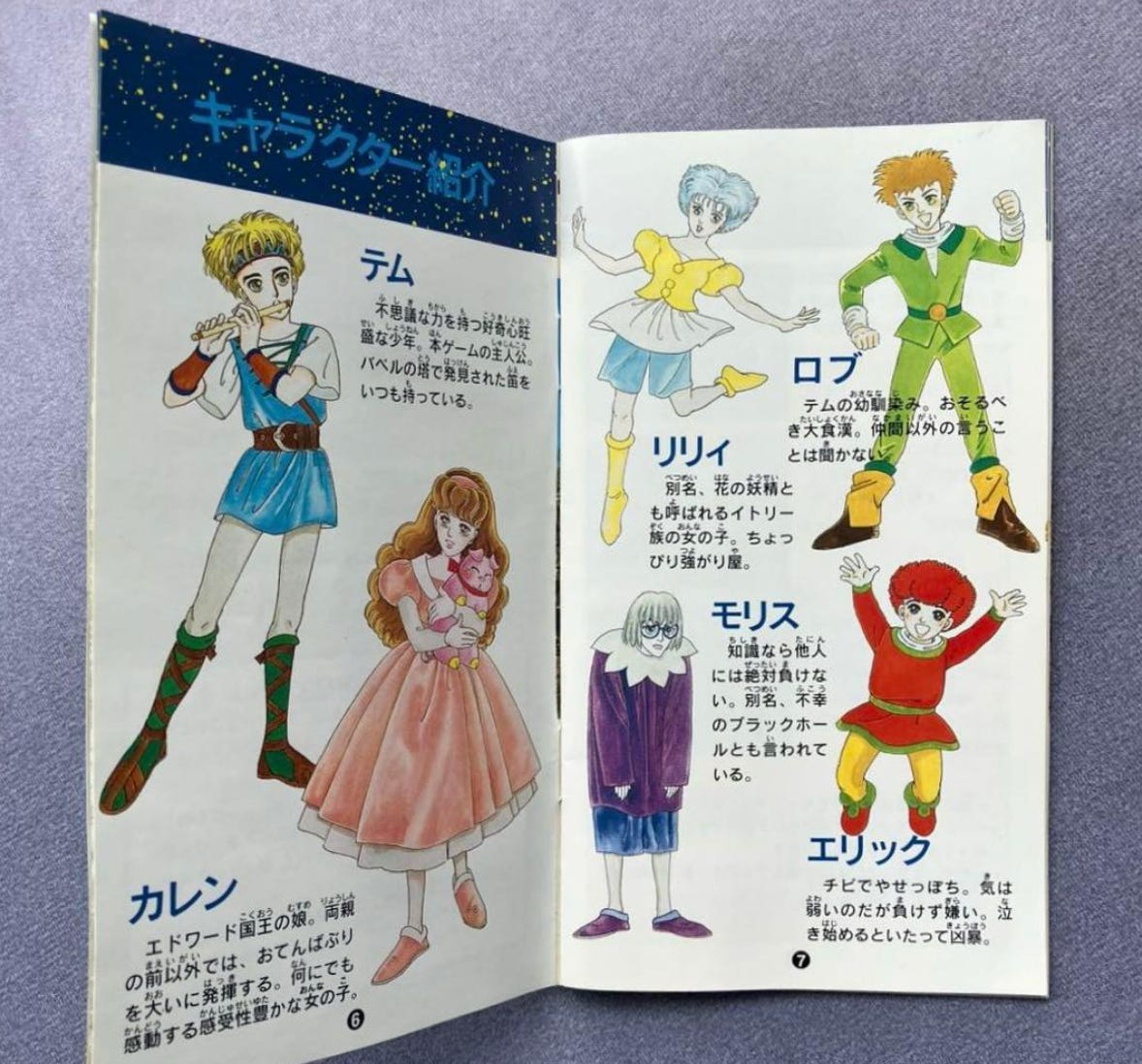
The story takes place across real-world ancient ruins, including the Nazca Lines, the Great Wall of China, and Angkor Wat. Setting itself apart from the mainstream "heroic fantasy" tropes of 1993, the narrative moves beyond conventional tropes to address somber historical realities including slavery, ecological ruin, and moral compromise under extreme conditions. This deep thematic nuance left an indelible mark on players of the era, securing its enduring legacy.
Overseas, the game was published in 1994 by Nintendo under the title Illusion of Gaia to high critical acclaim. However, due to Nintendo of America’s strict localization policies at the time, much of the religious symbolism and dark narrative elements were heavily censored or altered. Consequently, modern international fans actively seek out the original Japanese version, even sparking fan re-translation projects to faithfully restore Ohara’s original Japanese text. In today’s retro market, loose cartridges fetch around ¥1,500–¥2,000, boxed copies with manuals go for ¥3,000–¥5,000, and CIB copies reach upwards of ¥6,000.
EXAMINING THE LISTING
Item Information
Title: Gaia Gensōki / Illusion of Gaia (Super Famicom)
Buyee Listing: https://buyee.jp/mercari/item/m92684091893
Price: ¥3,999 (Approx. $25 - $27 USD)
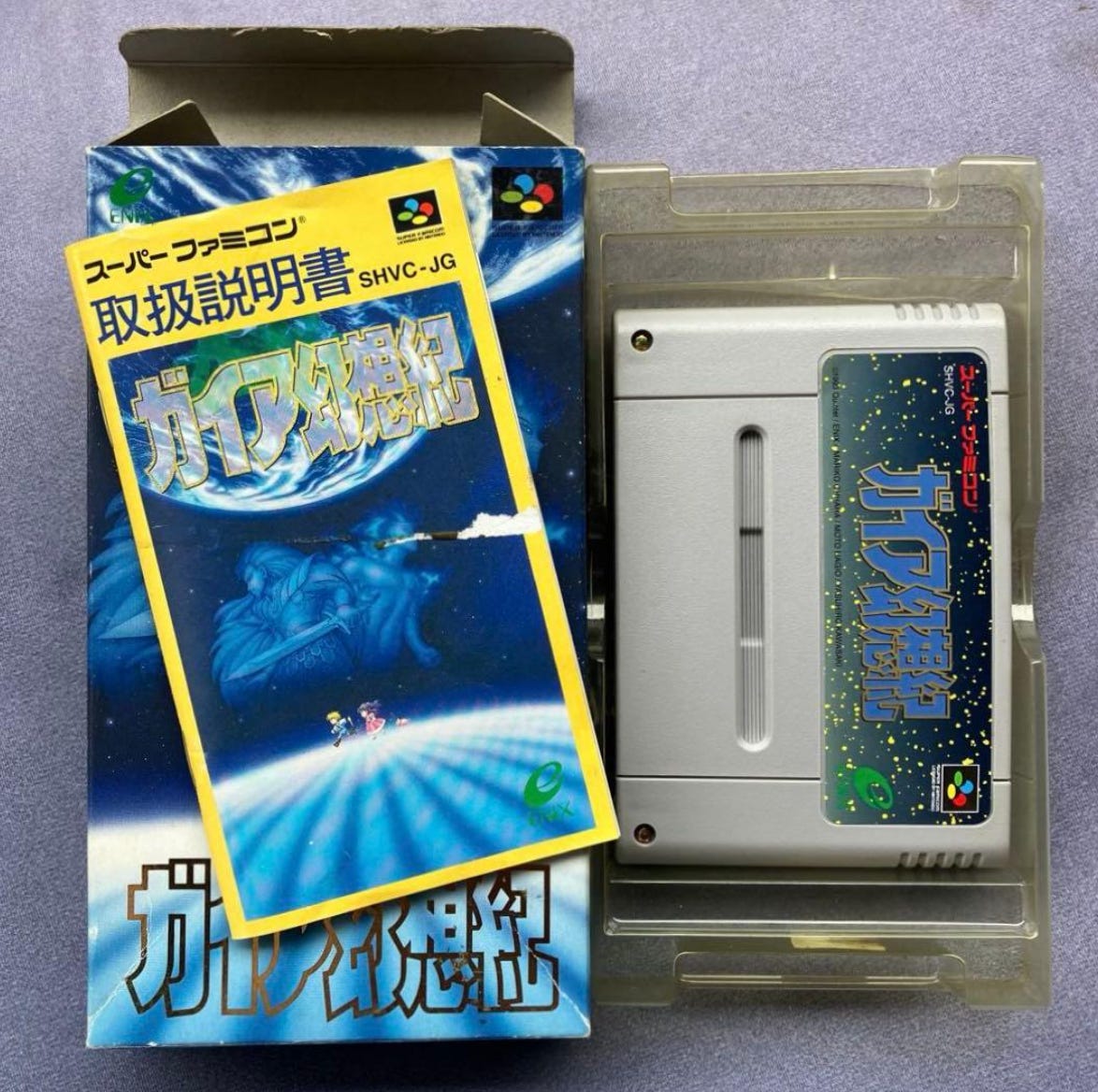
Contents: Box, Manual & Cartridge (CIB minus inner plastic bag, registration postcard, and AC adapter insert)
Box Condition: Signs of use, corner crushing, and edge wear
Manual Condition: Cover peeling/creased; interior pages remain clean
Cartridge Condition: Excellent condition; tested and working
Collector’s Evaluation
The seller mentions finding this copy during a warehouse cleanout. While not a dedicated collector, they appear to be selling off a sizable collection of retro video games.
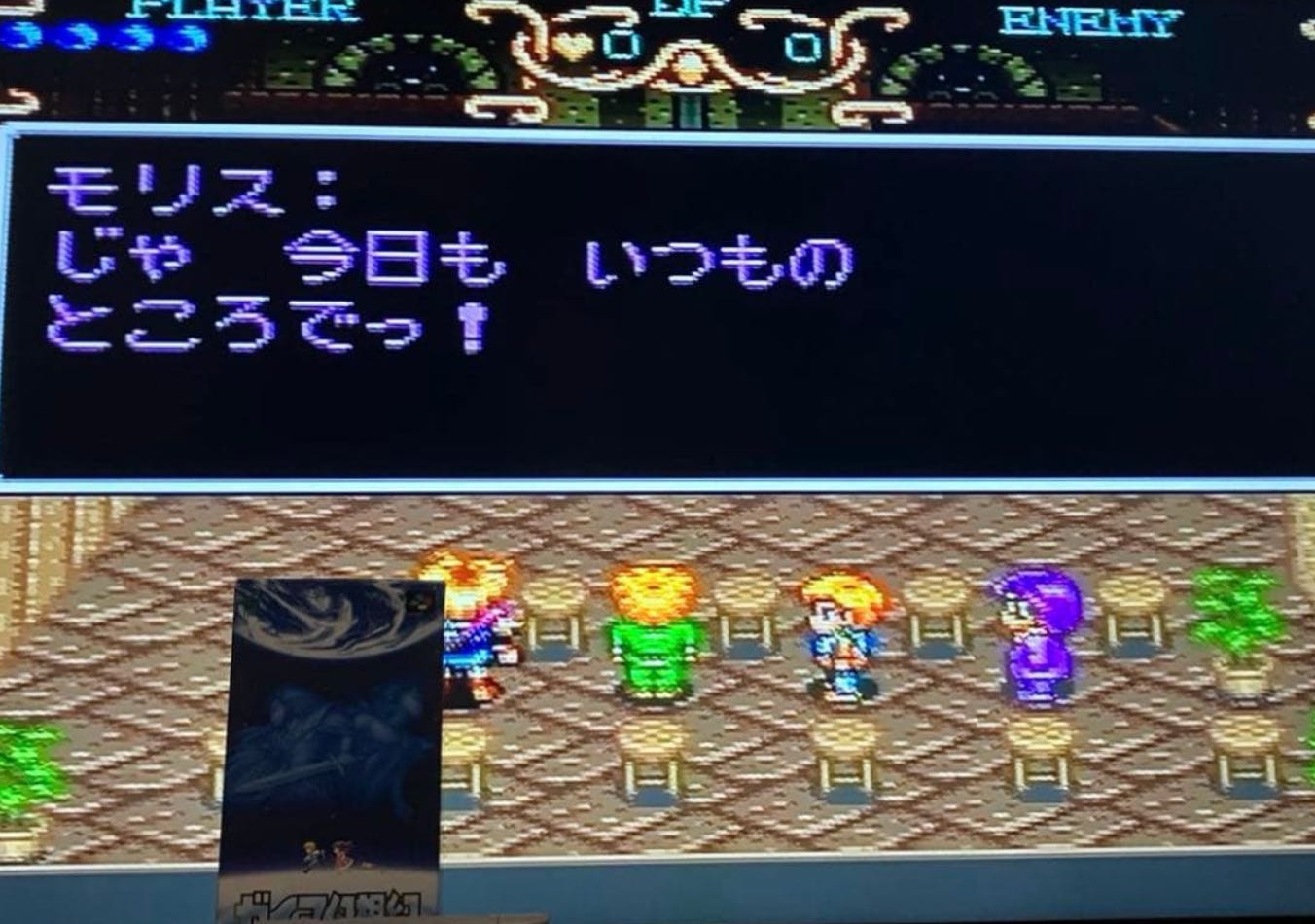
With games over 30 years old, operational failure is the biggest risk for buyers. However, this seller provides multiple photos showing the game actively booted on original hardware, eliminating functionality concerns. Their thorough disclosure of conditions instills immediate buyer confidence.
The indicators of authenticity are also clear:
2-digit factory stamp debossed on the back label
Twin circular indentations on the lower corners of the rear shell
Authentic metal security screws on the front shell
Crisp print quality and accurate color palette on both the box and cartridge label
This is almost certainly an original domestic Japanese release manufactured in 1993, rather than a modern counterfeit or reproduction bootleg.
From a strict condition grading standpoint, the listing takes points off for the outer box wear, minor inner tray damage, creased/peeled manual cover, and missing inserts (inner bag/postcard), meaning it cannot be categorized as “Complete / Mint.” However, the inner pages of the manual remain clean, and the cartridge shell itself is virtually free of scratches, grime, or severe yellowing. It gives the distinct impression of an item that was stored safely in a dark space for decades after being passionately played and read through by its original owner back in the day.
Final Verdict
With boxed copies averaging ¥3,000–¥5,000 and pristine complete copies reaching ¥6,000, a tested, working boxed copy priced at ¥3,999 represents a very fair deal. The seller’s transparent disclosure makes it a relatively low-risk purchase.
While it may not suit high-end purists seeking flawless mint-condition items, it offers incredible value for players who want a physical boxed copy to hold in their hands while experiencing Moto Hagio’s artwork and Mariko Ohara’s uncensored original narrative.
Written by A_Kotaro | Translated by Lotus
[Market Reality Note] The artifacts featured in our reports are live, highly volatile listings sourced directly from the Japanese domestic secondary market. Due to the underground nature of these collector ecosystems, items may sell out or be removed by the seller at any given moment. Consider each report a real-time window into a vanishing opportunity.
Request Our Premium VIP Hunting Service for Ultra-Rare Vintage Items:
The artifacts exist. The mud is deep.
If you seek a specific Holy Grail in the Japanese underground market and demand our uncompromising vetting process, this private dispatch is available.